
Wind Damage After Mahoning Valley Thunderstorms: Signs Your Shingles Need Repair
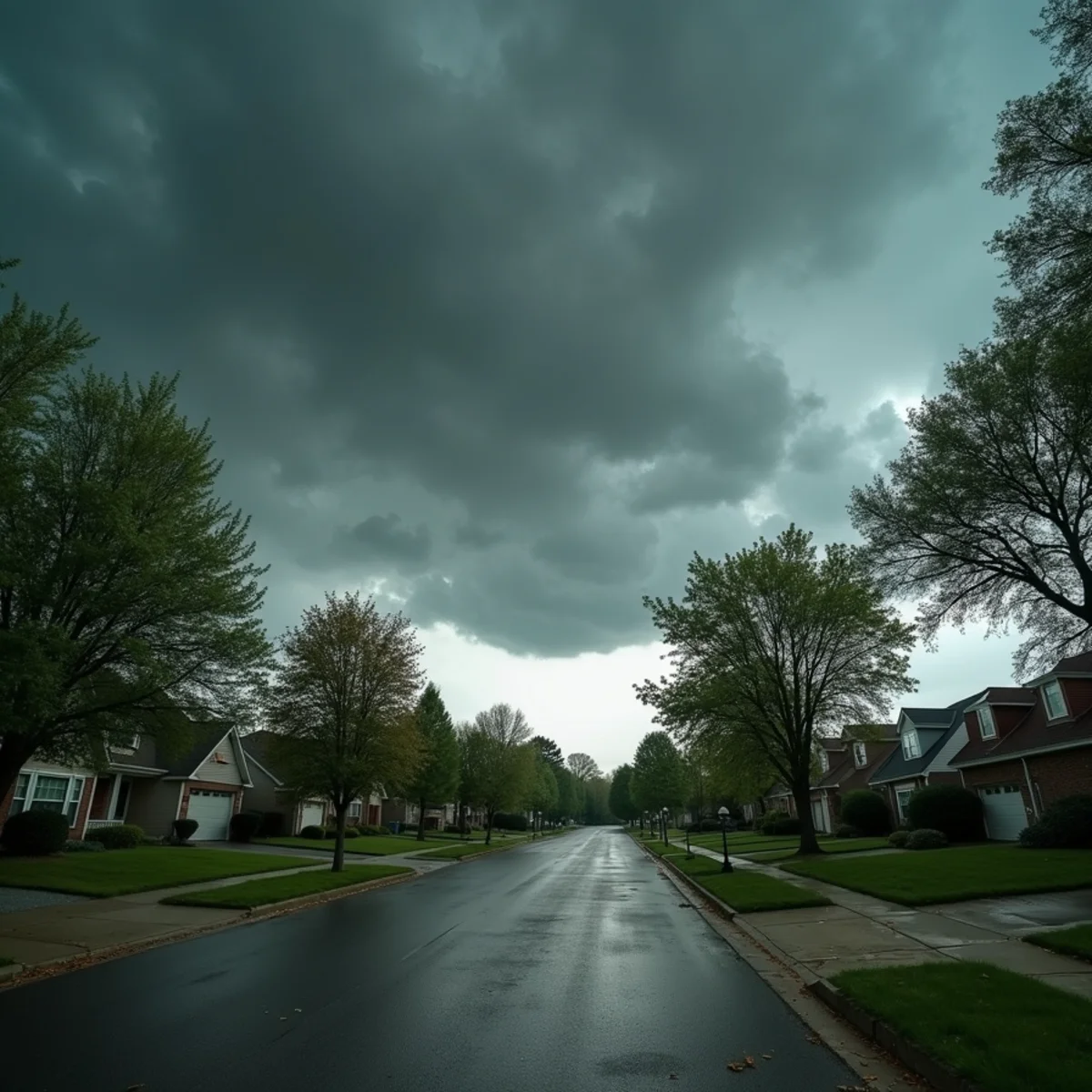
Signs of wind damage after Mahoning Valley thunderstorms include loose shingle tabs found on your lawn, dark horizontal crease lines across the upper third of shingles, unsealed adhesive strips flapping in light breezes, peeled rake edge drip metal, and dented ridge caps. Even if shingles haven't blown off entirely, fractured fiberglass mats and broken sealant bonds allow water to seep through nail lines, requiring prompt professional repair.
Severe thunderstorms rolling across the Mahoning Valley frequently unleash straight-line wind gusts exceeding 50 to 75 miles per hour. While dramatic tornado sightings command breaking news headlines, ordinary summer thunderstorm wind events cause exponentially more structural roof destruction across thousands of homes in Youngstown, Boardman, Canfield, and Austintown.
The fundamental danger of thunderstorm wind damage is its stealth. Homeowners commonly look out their front window after a storm, see that most shingles appear in place, and mistakenly assume their roof weathered the storm unscathed. In reality, wind uplift operates through subtle aerodynamic suction forces that unseal factory thermal adhesives and break internal fiberglass structural mats without immediately tearing shingles away.
Understanding the exact physics of wind uplift, learning how to identify subtle wind creases from the ground, and knowing when to file an insurance claim can protect your property from hidden attic moisture rot and costly structural ceiling failure.
1. The Physics of Aerodynamic Wind Uplift on Residential Slopes

When strong thunderstorm gusts travel across open terrain and collide with the vertical walls of a home, airflow is deflected upward toward the roof planes. As the wind rushes over the eaves, rakes, and ridge lines, it accelerates rapidly, creating a localized drop in air pressure in accordance with Bernoulli's principle.
This pressure differential creates aerodynamic negative pressure—a powerful vacuum suction—pulling upward on the outer surface of your shingles. The vulnerable perimeter edges (the eaves and rake gables) experience up to three times more uplift pressure than the center field of the roof. If shingles are aged, brittle from thermal expansion cycles, or were originally installed with improper high-nailing patterns, the factory asphalt adhesive strip separates under this suction force.
2. Key Visible Signs of Wind Damage to Look For
Following any severe storm in Northeast Ohio with reported wind gusts over 50 MPH, conduct an exterior ground-level inspection around the entire perimeter of your home. Look for these four critical diagnostic indicators:
Shingle Debris on the Lawn and Landscaping
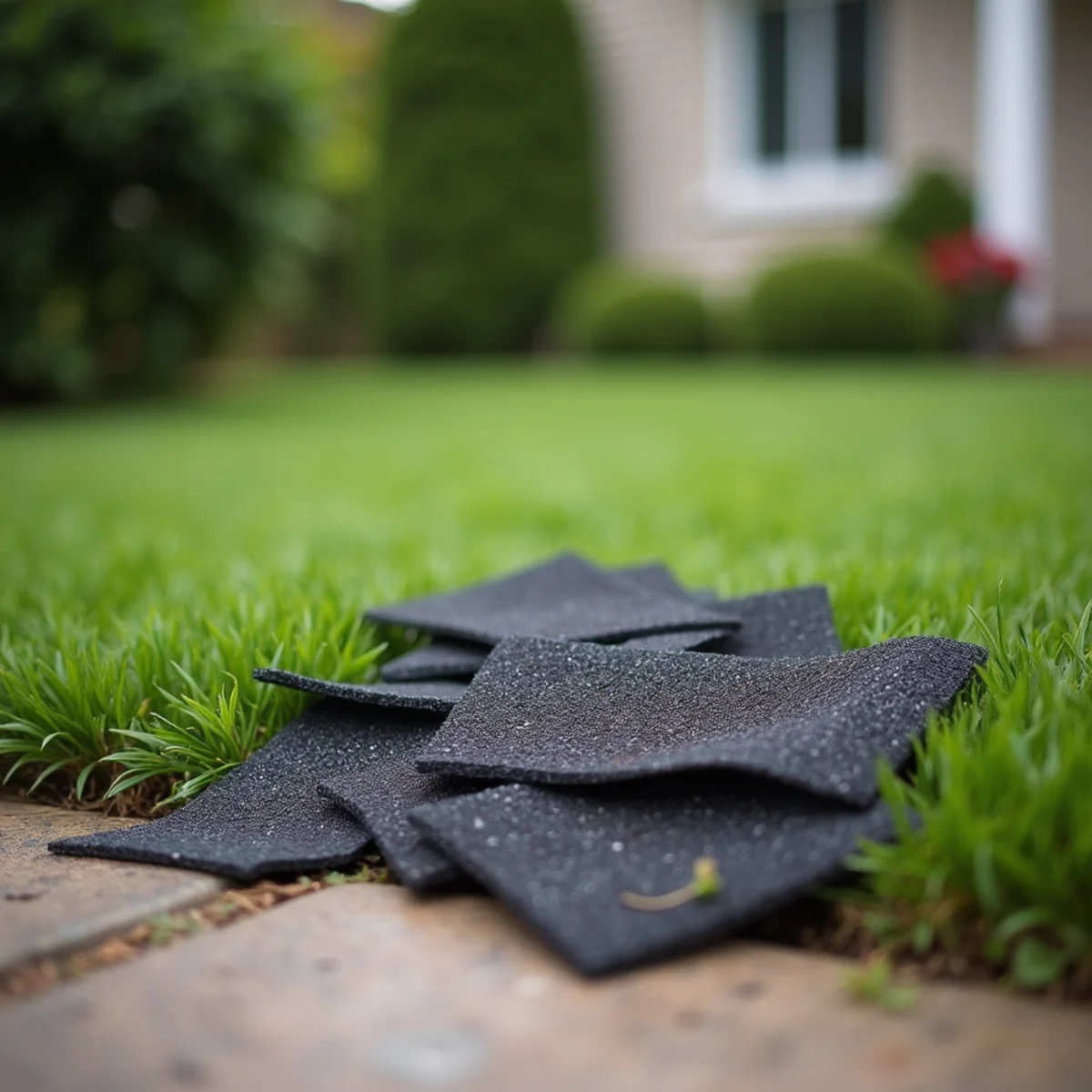
Finding shingle corners, torn tab fragments, or entire shingle strips lying on your lawn, patio, or flowerbeds is definitive proof of system failure. If pieces of shingles have blown completely off, adjacent shingles on that slope have experienced extreme uplift stress and their sealant bonds are almost certainly compromised.
Horizontal Creasing Across Shingle Tabs
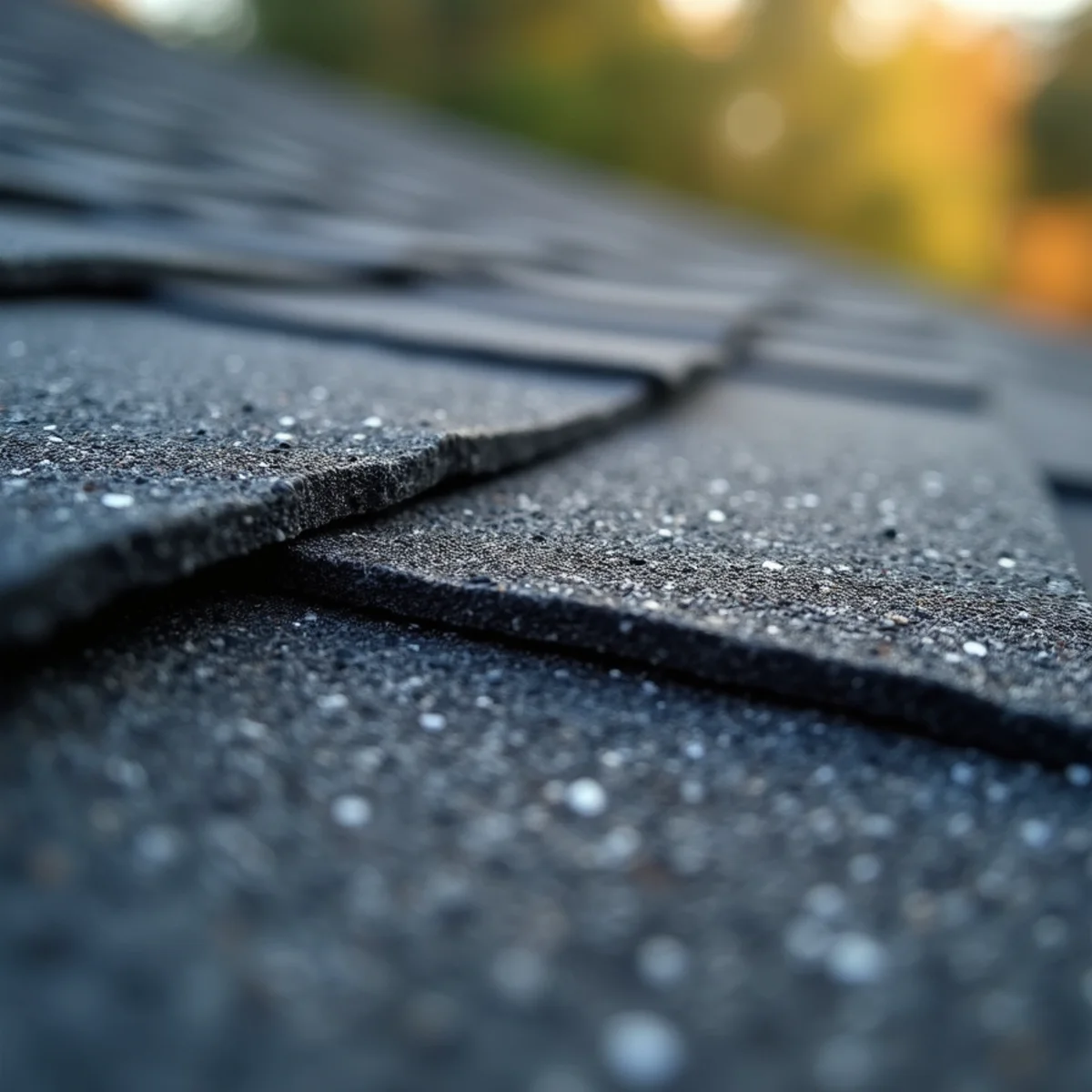
When wind lifts an unsealed shingle tab, it bends the tab backward like a hinge until it strikes the butt edge of the overlapping shingle above it. This bending motion creates a permanent horizontal crease across the upper third of the tab. In architectural and 3-tab shingles, this crease fractures the embedded fiberglass mat and strips surface mineral granules away, leaving a visible dark line. Once creased, a shingle cannot shed water effectively and will flap violently in subsequent breezes.
Perimeter Drip Edge and Fascia Metal Peeling
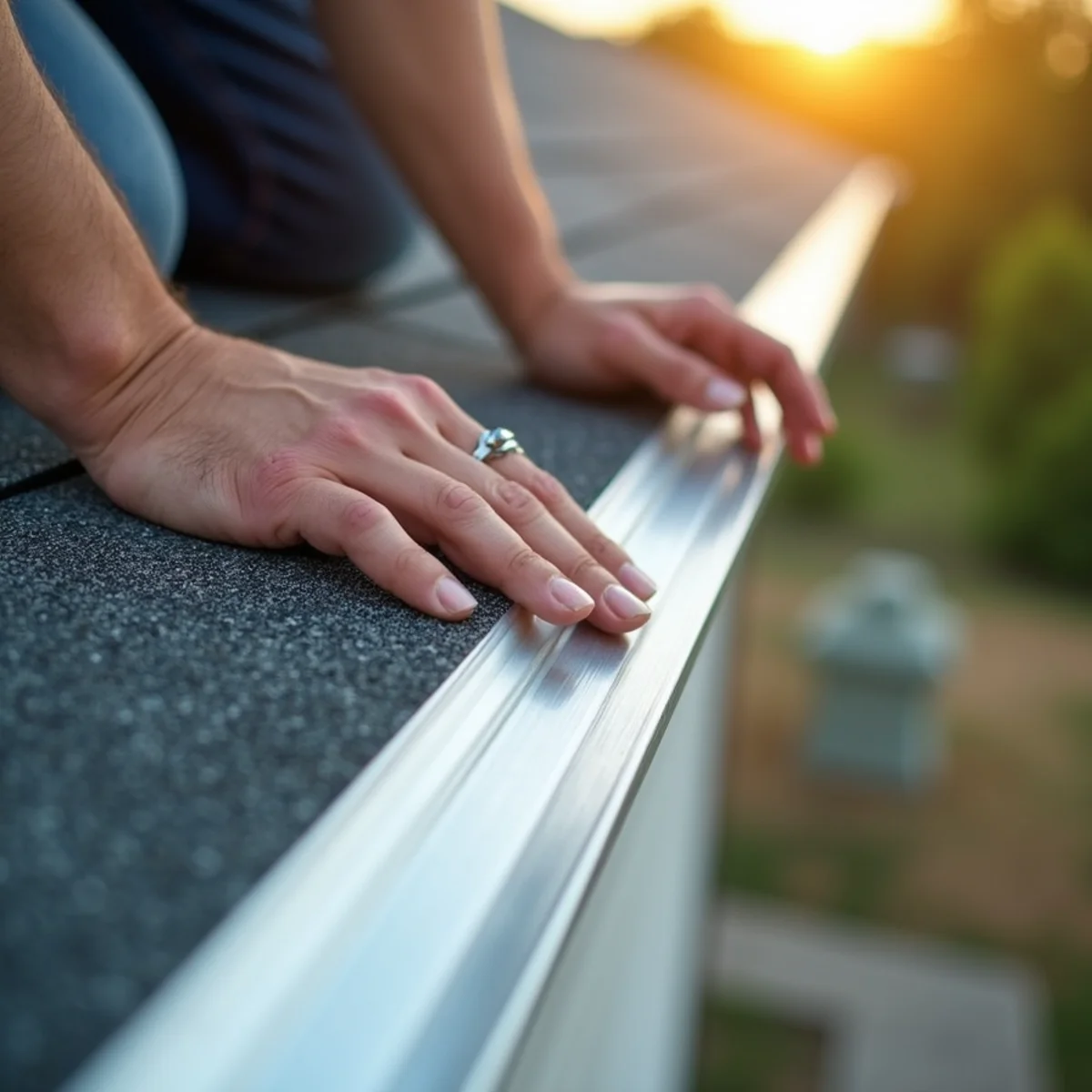
High-velocity wind gusts catch loose edges of aluminum drip edge flashing along rake boards, bending the metal outward like an open tin can. Once drip edge is deformed, wind-driven rain is forced directly behind the fascia board, rotting roof rafters and saturating perimeter soffit vents.
Dislodged or Lifted Ridge Vent Caps
The ridge line represents the highest point of aerodynamic lift on any roof. High winds frequently tear individual ridge cap shingles off the roof peak or lift plastic ridge vent baffles, allowing driving horizontal rain to pour directly into the attic opening.
3. Why You Must Never Attempt to Glue Down Creased Shingles
Homeowners often ask if they can simply apply a tube of black roofing mastic or construction adhesive under lifted shingles to save money on repairs. In professional roofing standards, this approach is fundamentally flawed.
Applying cold roof cement under a fractured shingle tab does not restore the broken fiberglass reinforcement core. When Ohio temperatures plunge below zero during winter, rigid roofing cement cracks, while trapped summer heat causes the mastic to liquefy and slide down the roof. Furthermore, excessive tar can trap water behind the shingle, accelerating decking rot. When a shingle is creased or torn, the only code-compliant, warrantable solution is surgical extraction and replacement.
4. Professional Wind Damage Repair: The Precision Extraction Method
Repairing wind damage requires delicate craftsmanship to avoid damaging adjacent shingles, particularly on older roofs where shingles have become brittle from UV exposure.
Our certified technicians execute a step-by-step restoration process:
First, we gently release the sealant bonds of the two courses of shingles directly above the damaged area using a flat roofing pry bar. Next, we use a specialized shingle ripper tool to carefully extract the existing nails without tearing the surrounding tabs. Saturated or water-stained plywood decking is inspected for rot. We then slide an exact color-matched replacement shingle into place, nail it down using a 6-nail high-wind installation pattern placed precisely in the manufacturer nailing strip, and apply hand-sealed asphalt tabs where necessary to ensure immediate thermal bonding.
5. Navigating Wind Damage Homeowner Insurance Claims in Ohio
Windstorm damage is a covered peril under virtually all standard HO-3 homeowner insurance policies in Ohio. If a thunderstorm has creased shingles across multiple slopes or blown off significant sections, you may be entitled to a full roof replacement under your insurance coverage.
Insurance carriers evaluate whether shingles can be repaired without causing consequential damage to neighboring aged shingles (commonly known as the 'brittle test'). If your shingles are so brittle that lifting them to insert replacement nails causes the surrounding shingles to tear, the entire slope or roof must be replaced under Ohio fair-claims practices. Our team meets directly with your insurance adjuster on-site, providing high-resolution digital photographs and documented wind-speed records from local National Weather Service stations to support your claim.
| Wind Gust Velocity | Typical Roof Impact | Primary Visual Indicators | Action Required |
|---|---|---|---|
| 45–55 MPH (Moderate Gale) | Unseals aging or brittle thermal sealant strips on older 3-tab roofs | Shingle edges slightly lifted; fine lines of asphalt dust at seal line | Ground inspection & resealing or spot replacement |
| 55–65 MPH (Severe Gale) | Bends unsealed shingles backward, fracturing internal fiberglass mats | Horizontal dark creases 1–2 inches below top overlapping shingle | Professional shingle replacement & attic moisture check |
| 65–75 MPH (Storm Force) | Tears shingles along nail fastener lines; peels aluminum drip edges | Shingle sections missing; exposed underlayment or bare wood decking | Same-day emergency tarping & insurance claim filing |
| 75+ MPH (Hurricane Force) | Structural uplift of ridge caps, chimney flashings, and decking panels | Widespread shingle blow-off across multiple slopes; active interior leaks | Full structural assessment & probable complete roof replacement |
When insurance adjusters inspect wind-damaged roofs in Mahoning County, the most frequently contested issue is whether shingles with broken seals are truly damaged if they haven't flown off the house. In roofing engineering, once a high wind gust lifts a shingle tab upward past 45 degrees, the internal woven fiberglass reinforcement mat fractures horizontally along the nail line. Even though gravity pulls the tab back flat when the wind dies down, the shingle has permanently lost its shear strength. During the next driving rainstorm, surface water travels sideways through that invisible horizontal fracture directly into the shank holes of the roofing nails, causing wood rot in the decking. In Ohio, building code and manufacturer warranty specifications dictate that creased shingles cannot be glued back down; they must be replaced.
Related Local Roofing Services & Coverage
Experiencing issues highlighted in this guide? Our certified roofing crews provide expert professional wind damage roof repair with rapid response times across Mahoning County and Canfield and Boardman.
Comprehensive insurance claims assistance and structural repairs after severe weather.
24/7 rapid dispatch to cover exposed roof sheathing before the next rain event.
Upgrade to 130-MPH wind-rated architectural laminate shingles with enhanced sealant bonds.
Frequently Asked Questions
Zana Roofing & Construction
Family-owned roofing contractor proudly serving Youngstown and the Mahoning Valley since 2020. Specializing in residential and commercial roof replacement, storm restoration, and 24/7 emergency leak mitigation.