
What to Do When Your Roof Leaks During a Youngstown Storm
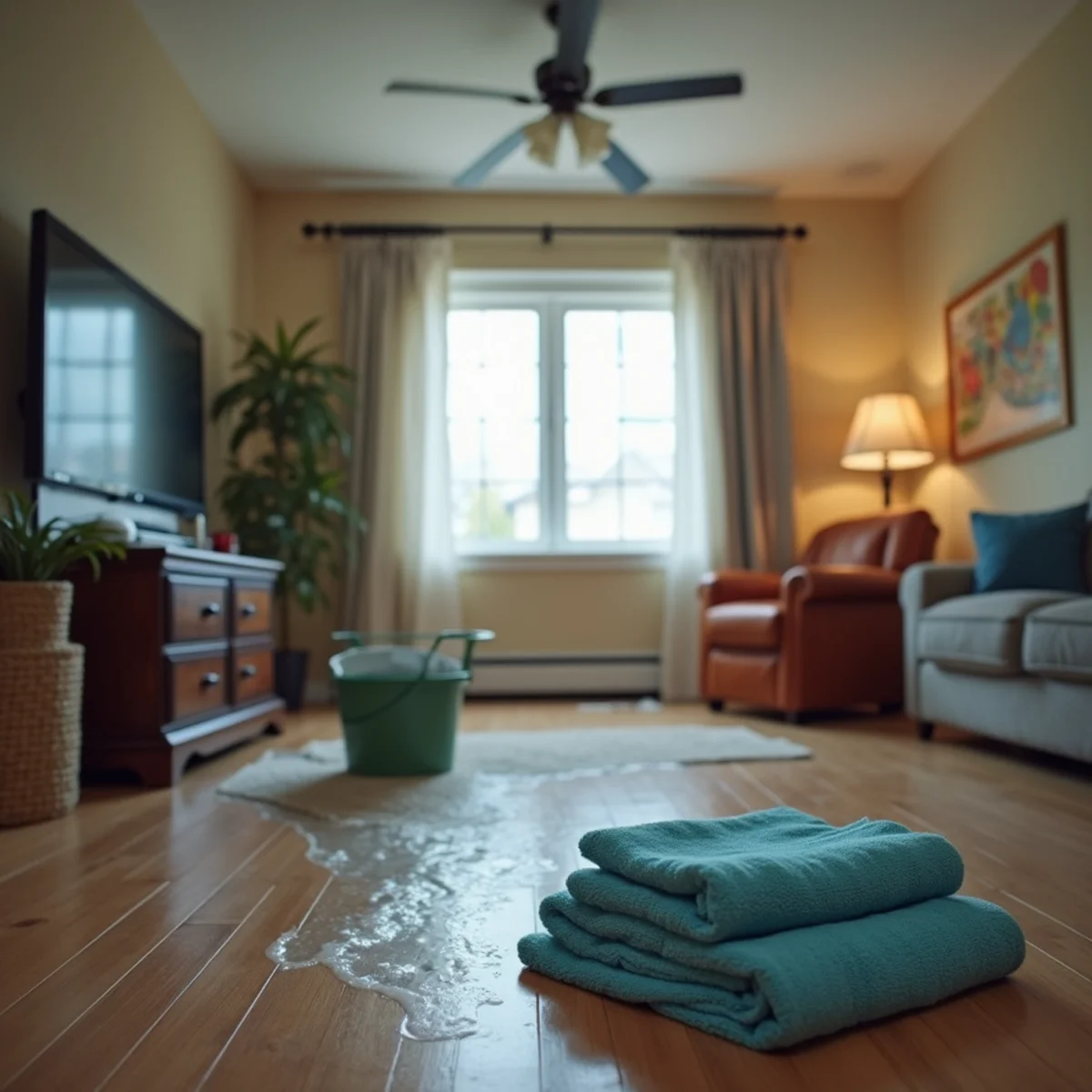
If your roof begins leaking during an active Youngstown storm, immediately move furniture, turn off electricity to wet rooms at the breaker panel, place a deep bucket under the drip, and relieve trapped ceiling water by puncturing the center of any sagging drywall bulge with a screwdriver. Never climb onto a wet roof during a storm; call a 24/7 emergency roofing contractor to install a heavy-duty secured tarp once wind conditions allow.
A sudden roof leak during a torrential Mahoning Valley thunderstorm creates instant anxiety. Whether water is trickling down a bedroom wall or actively dripping through a living room ceiling light fixture, the decisions you make in the first sixty minutes determine whether you face a modest drywall touch-up or thousands of dollars in structural wood rot, ruined hardwood flooring, and hazardous black mold infestation.
Youngstown experiences approximately 41.19 inches of annual precipitation and sudden, violent summer squalls driven by lake-effect moisture systems. When driving rain penetrates compromised shingles, lifted valley flashing, or aged plumbing vent boots, gravity pulls water down rafters until it finds an exit point inside your living space.
Here is the exact emergency protocol every Mahoning and Trumbull County homeowner should follow when water starts penetrating your home during a severe weather event.
1. Eliminate Immediate Electrical and Personal Hazards
The combination of water and residential 120V/240V electrical wiring represents an acute life-safety risk. If water is dripping from or pooling around a ceiling light fixture, ceiling fan, smoke detector, or down an interior wall containing electrical outlets, do not touch the light switches or appliance cords.
Proceed immediately to your main electrical service panel (typically located in the basement, utility room, or garage) and switch off the specific circuit breakers supplying power to the affected rooms. If water is widespread across the upper floor or you cannot safely reach the breaker box without stepping in standing water, shut off the main disconnect breaker entirely.
2. Contain Water Spread and Relieve Ceiling Drywall Pressure
Once electrical safety is established, focus on containing water volume to prevent subfloor saturation and downstairs ceiling damage.

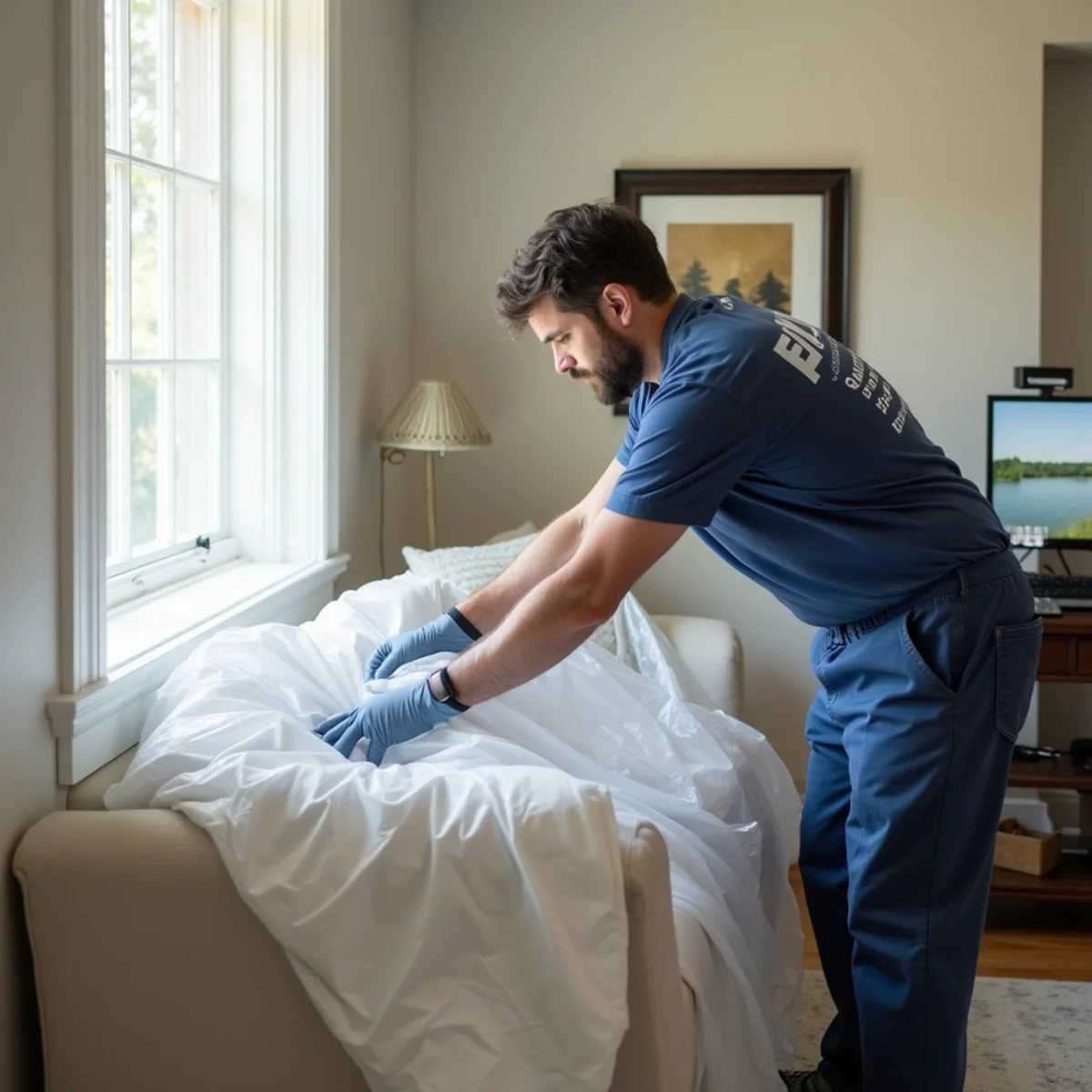
Clear furniture, oriental rugs, and consumer electronics completely out of the drop zone. Lay down heavy plastic drop cloths, vinyl shower curtains, or large trash bags across hardwood floors or carpeting to form an impermeable catch basin.
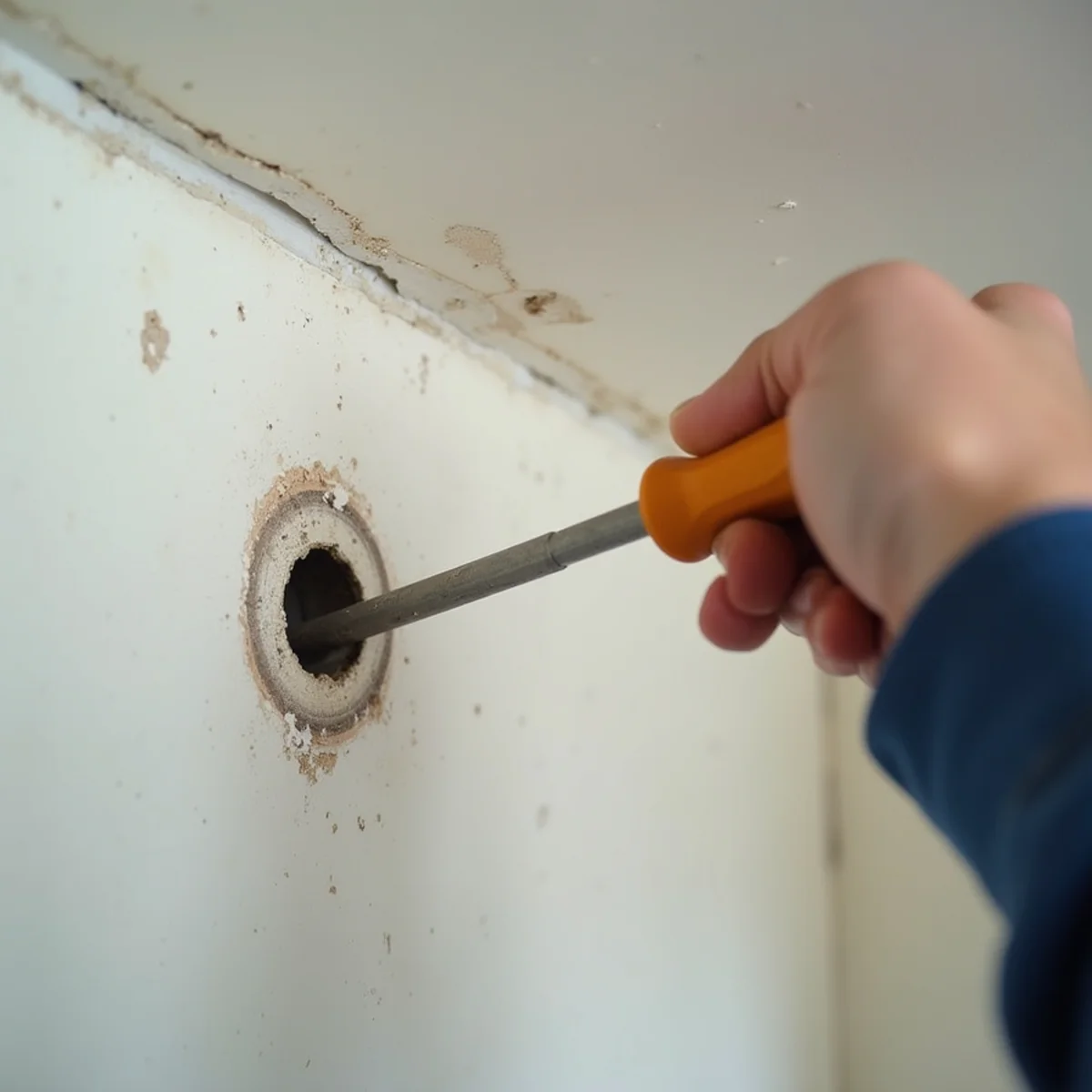
When water pools on top of ceiling drywall, standard half-inch gypsum board absorbs the moisture like a sponge. As it saturates, it softens and begins bowing downward under the increasing weight of the trapped water pool. If left unvented, hundreds of pounds of saturated drywall and wet attic insulation can collapse simultaneously, destroying furniture and creating a massive hazard. Place a 5-gallon bucket or plastic storage tote directly underneath the lowest point of the sagging drywall bulge. Take a long screwdriver, awl, or drywall screw and puncture a small, clean drainage hole directly in the center of the bulge. The trapped water will immediately drain in a controlled stream into your bucket, relieving tension on the ceiling joists.

3. Document the Entire Loss for Your Homeowners Insurance Claim
Most Ohio homeowners insurance policies cover sudden and accidental water damage resulting from severe storm events, such as wind-torn shingles or fallen tree limbs. However, insurance adjusters require indisputable visual proof that the damage was caused by an active storm rather than long-term homeowner neglect.
Before moving wet debris or beginning major clean-up, use your smartphone camera to record extensive photo and video documentation:
Capture wide-angle shots showing the location of the leak within the room, medium shots of water dripping into containers, and close-up photos of drywall water stains, blistered paint, damaged baseboards, and ruined carpeting. Capture video with audio running to document the sound of active rainfall and dripping. Keep all damaged items in a dry holding area (such as a garage) until your insurance adjuster inspects them; discarding items prematurely can lead to claim payout denials.
4. Never Climb onto a Wet, Storm-Damaged Roof
During a storm crisis, homeowners often feel an urgent urge to climb onto the roof with a tarp or a can of roof cement. In our decades of local roofing service, this is by far the most dangerous mistake a property owner can make.
Wet asphalt shingles lose their surface traction, wet moss or algae becomes slick as ice, and sudden 40 to 60 MPH thunderstorm wind gusts can easily dislodge a homeowner from an aluminum ladder or roof slope. Furthermore, hidden storm impacts—such as fractured rafter ties or punctured plywood decking beneath shingles—can cause structural collapse under your body weight. Professional roofing technicians utilize OSHA-compliant fall protection harnesses, ladder standoff stabilizers, specialized high-traction roofing footwear, and ridge anchors to operate safely.
5. What Professional Emergency Roof Tarping Involves
When you contact a reputable local 24/7 roofing contractor, a fully equipped emergency response team is dispatched with commercial-grade mitigation materials. Professional emergency tarping is significantly more complex than simply laying a blue tarp over shingles and weighing it down with bricks or loose landscape pavers.
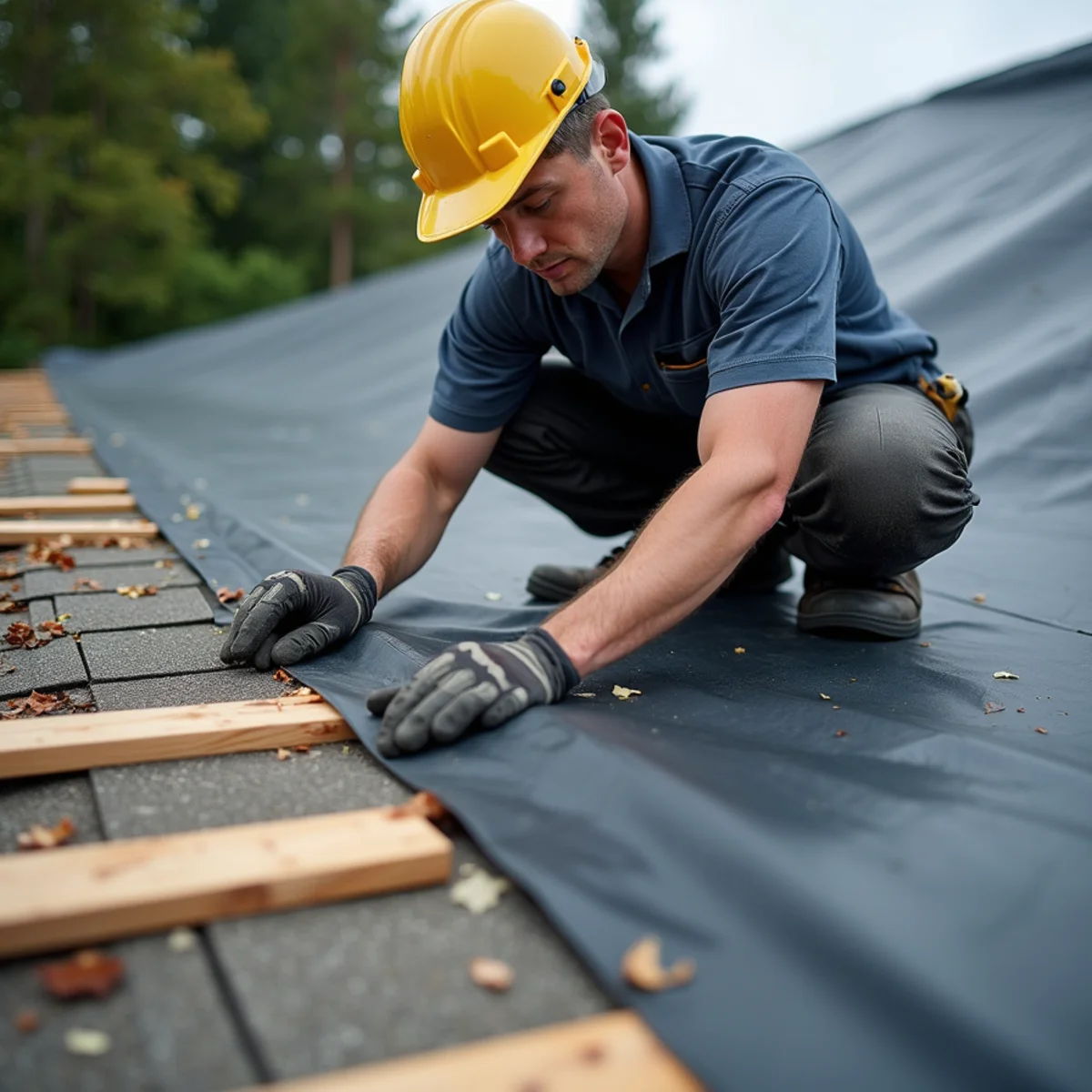
Our technicians deploy heavy-duty 10-mil woven poly tarps treated for high ultraviolet resistance. The upper edge of the tarp is wrapped around dimensional 2x4 lumber battens and carried completely over the roof ridge line onto the leeward slope, preventing wind uplift from peeling the tarp back. The perimeter edges are mechanically fastened through wood battens into roof trusses with ring-shank fasteners sealed with elastomeric flashing mastic. A properly installed battened emergency tarp can withstand 60 MPH wind gusts and protect your interior for up to 90 days while permanent repairs or full roof replacement are organized.
6. Tracing the Leak in the Attic After the Rain Subsides
Once rain stops and conditions are safe, a certified roofing technician will enter your attic space to conduct forensic leak mapping. Armed with high-lumen inspection lighting and non-destructive digital moisture meters, we inspect:
Roof Sheathing Underside: Dark water trails and active condensation along plywood or 1x6 tongue-and-groove plank seams.
Rafter and Truss Pathways: Water frequently runs horizontally along roof rafters for several yards before dropping onto ceiling insulation.
Penetration Flashing Collars: Plumbing vent boots (neoprene collars that crack after 7–10 years of Ohio UV and freeze-thaw cycles), furnace B-vent flashings, and skylight perimeter curb channels.
Valley Transitions: High-volume water valleys where metal flashing may have buckled or where ice and water shield membranes were omitted by previous installers.
Attic Insulation Saturation: Saturated blown-in cellulose or fiberglass batt insulation loses its thermal R-value permanently and becomes a breeding ground for mold spores within 24 to 48 hours. Saturated insulation must be carefully extracted and replaced as part of comprehensive water damage remediation.
7. Permanent Repair vs. Full Roof Replacement: Making the Right Call
Following emergency stabilization, the critical decision is whether the roof can be permanently repaired or requires a complete structural replacement.
If your roof is under 12 years old, the shingle shingles remain pliable with intact granule coverage, and the damage is isolated to a specific tree impact, torn ridge cap, or failing pipe boot, a precision targeted repair is both economical and long-lasting.
However, if your shingles are brittle, curl at the edges, shed excessive granules into gutters, or if wind has broken the factory adhesive sealant strips across multiple slopes, spot repairs will simply leave adjacent aged shingles vulnerable to the next squall. In these cases, our project specialists provide an itemized written estimate detailing full tear-off, 1/2-inch CDX plywood decking replacement per sheet, synthetic underlayment, and Class 4 impact-resistant architectural shingles built for Northeast Ohio weather.
| Phase | Timeframe | Homeowner Action | Professional Roofer Action | Primary Objective |
|---|---|---|---|---|
| Phase 1: Immediate Safety | Minutes 0–15 | Cut power at breaker panel, move electronics, position buckets | Dispatch mobile crew with waterproof tarps & ladder gear | Prevent electrical fires and personal injury |
| Phase 2: Pressure Relief | Minutes 15–45 | Puncture center of drywall bulge over bucket, lay plastic sheeting | Review property roof pitch & ingress hazards via aerial map | Prevent catastrophic drywall ceiling collapse |
| Phase 3: Evidence Capture | Minutes 45–60 | Photograph dripping water, drywall rings, and damaged carpet | Conduct intake for insurance claim documentation | Establish proof of sudden storm-related occurrence |
| Phase 4: Exterior Mitigation | Hours 1–3 | Keep clear of perimeter eaves; do not climb wet ladders | Install 2x4 battened commercial tarp over roof ridge line | Lock out weather until storm front passes completely |
| Phase 5: Permanent Repair | Days 2–5 | Review adjuster scope and itemized contractor proposal | Replace saturated decking, step flashing, and shingle courses | Restore 100% structural weather-tight integrity |
In over twenty years of inspecting storm-damaged homes in Mahoning County, the most critical lesson we share with homeowners is that interior ceiling water almost never enters the roof directly above the stain. Water penetrates a compromised ridge cap, rusted valley, or loose plumbing vent boot, travels down the sloped top chord of a rafter or along the underside of roof sheathing for 10 to 25 feet, and only drips through ceiling drywall where it encounters a drywall joint seam or an electrical fixture opening. Attempting to patch the shingles directly above an interior ceiling spot without tracing the attic rafter path will guarantee the leak returns during the very next storm.
Related Local Roofing Services & Coverage
Experiencing issues highlighted in this guide? Our certified roofing crews provide expert 24/7 emergency roof repair and tarping with rapid response times across Boardman and Austintown and Youngstown.
Precision diagnostic tracing for valley, pipe boot, and chimney flashing leaks.
Insurance claim documentation and structural roof rebuilding after severe squalls.
Full architectural tear-off when aging decking and multiple slopes fail.
Frequently Asked Questions
Zana Roofing & Construction
Family-owned roofing contractor proudly serving Youngstown and the Mahoning Valley since 2020. Specializing in residential and commercial roof replacement, storm restoration, and 24/7 emergency leak mitigation.