
Snow Load and Commercial Roofs in Northeast Ohio: When to Worry
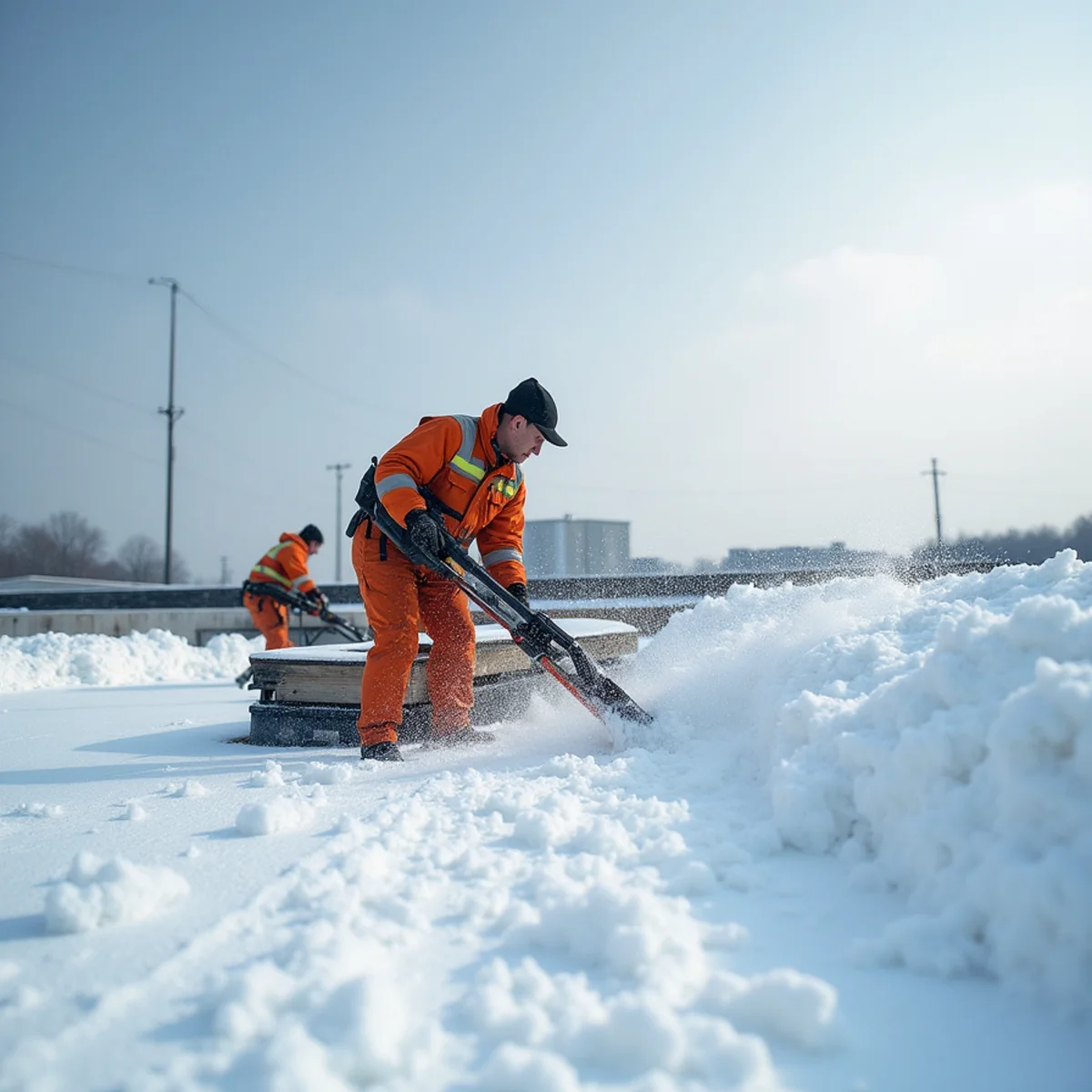
Commercial roofs in Northeast Ohio are engineered for 25 to 35 PSF snow load, but wind-driven lake-effect snowdrifts banked against parapet walls and rooftop HVAC units frequently exceed 75 PSF. Facility managers must monitor for steel joist deflection, sagging ceiling grids, bowing fire sprinkler mains, sticking exit doors, and frozen internal scuppers.
Commercial flat, low-slope, and open-span buildings across Youngstown, Boardman, Howland Township, and the Mahoning Valley are engineered to withstand substantial winter weather. Under the Ohio Building Code, commercial roofs in our region are typically designed to support a ground snow load of 25 to 30 pounds per square foot (PSF).
However, prolonged lake-effect snow squalls, high winds creating massive snowdrifts, and rain falling on top of existing snowpacks can push structural deadweights far beyond engineered design thresholds. Facility managers and building owners must understand when winter snow accumulation transitions from routine winter weather into an urgent structural emergency.

Snowpack Weight Physics: Why Depth Can Be Deceiving
One of the most dangerous mistakes a facility manager can make is gauging roof danger solely by snow depth. Ten inches of fresh, dry, powdery snow might weigh only 4 to 5 pounds per square foot—well within safe structural margins.
Conversely, 10 inches of wet, densely compacted lake-effect snow saturated by a winter rain shower can weigh upwards of 28 to 35 pounds per square foot. When rain falls onto snow, the snowpack acts like a giant sponge, absorbing gallons of liquid water without allowing it to drain through frozen internal roof scuppers. A commercial roof carrying 15 inches of rain-soaked slush is often teetering on the verge of structural yield.
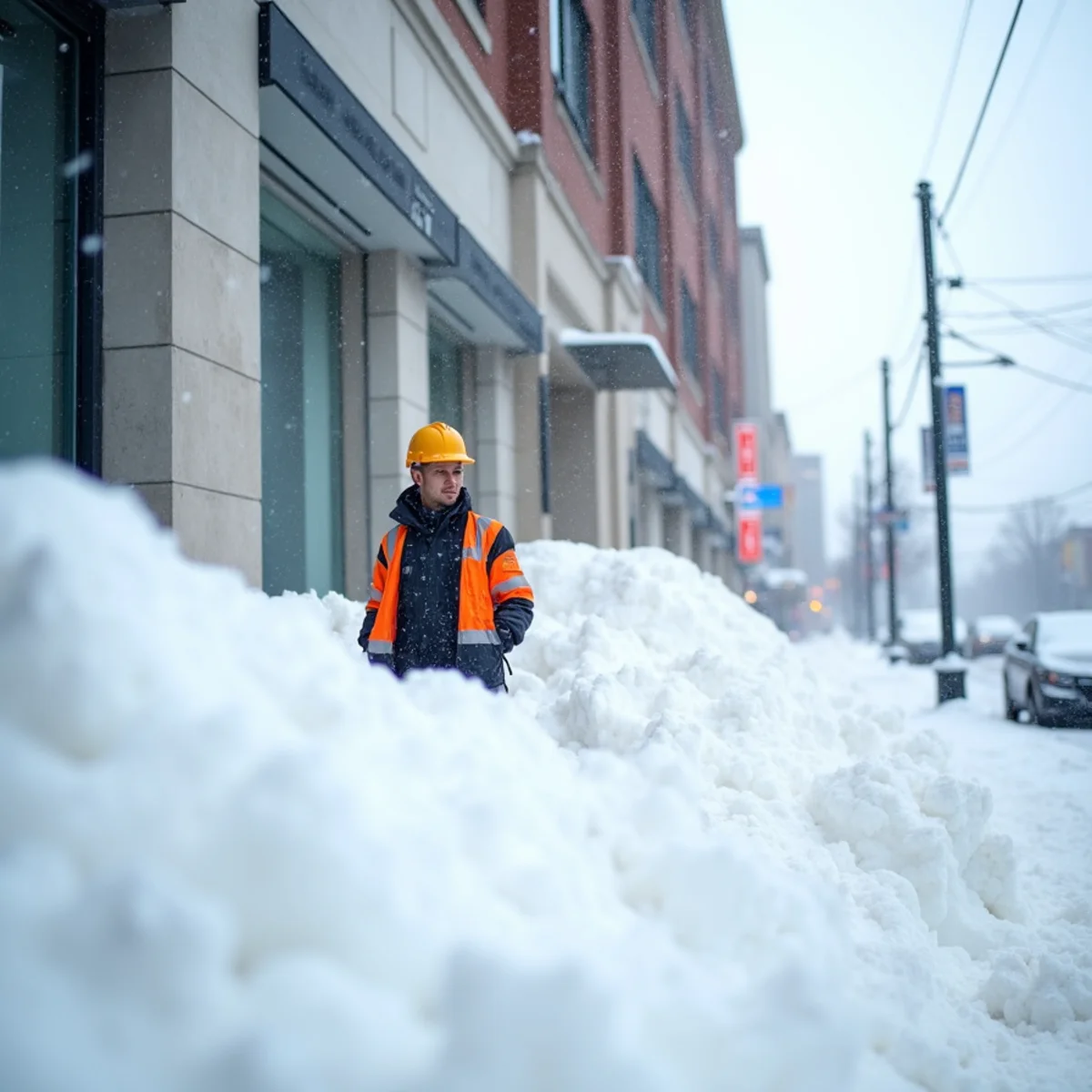
Aerodynamic Snowdrifts: Parapets, Penthouse Walls & HVAC Curbs
In commercial structures, snow load is rarely distributed uniformly. Powerful winter winds blowing across broad roof planes create aerodynamic vortex eddies around roof obstructions. Snow is scoured from the open roof field and deposited in massive localized drifts against:

1. High exterior parapet walls and building firewalls.
2. Rooftop elevator penthouse towers and stairwell bulkheads.
3. Large packaged rooftop HVAC units and makeup air chillers.
4. Step transitions where a higher building section overlooks a lower roof.
In these collection zones, a 6-foot snowdrift can concentrate over 70 to 95 pounds per square foot over a 15-foot radius. This concentrated load can easily exceed the bending moment of underlying steel bar joists and light-gauge metal roof decking.
The 4 Warning Signs of Commercial Structural Distress
Facility personnel should continuously monitor building interiors during severe winter storms. If any of the following warning signs are observed, the building should be immediately evaluated for evacuation:
1. Visible Sagging of Steel Bar Joists or Purling
Look down the sightlines of structural steel bar joists in warehouse spaces. Any visible downward deflection or twisting of bridging lines indicates serious overload.
2. Deflection of Suspended Utilities and Sprinkler Pipes
Fire protection sprinkler mains, suspended electrical conduit runs, and acoustic ceiling grids will bow downward or pull loose from structural ceiling anchors as the roof deck sags.
3. Jammed Interior and Exterior Doors
Severe roof loads compress exterior load-bearing wall studs and perimeter columns, pinching door frames. If fire exit doors or warehouse personnel doors suddenly stick or cannot be opened, the framing is under extreme compressive deflection.
4. Popping, Creaking, or Metallic Groaning Sounds
Audible sounds of creaking steel, popping drywall, or shearing bolts echoing through a commercial facility are an immediate life-safety alarm. Evacuate the premises and contact emergency services.
Safe Commercial Snow Removal Protocols
Never allow inexperienced custodial staff or general maintenance workers to shovel a commercial membrane roof. Standard steel shovels, sharp spade edges, snowblowers, and pickaxes will puncture 60-mil EPDM and TPO membranes, turning a snow load issue into dozens of catastrophic ceiling leaks.
At Zana Roofing & Construction, our commercial emergency teams utilize OSHA-certified tie-off lifelines, non-marking plastic snow scoops with rounded safety edges, and low-pressure steam wands to open frozen drains. Crucially, we leave a 2-inch protective buffer layer of snow over the membrane to ensure shovels never make physical contact with the waterproofing rubber skin.
| Snowpack Consistency | Weight per Cubic Foot | Critical Depth for 30 PSF Limit | Structural Risk Level | Mandated Protocol |
|---|---|---|---|---|
| Fresh Dry Powder | 4 – 6 lbs / cu. ft. | 60 – 90 Inches (5 – 7.5 Feet) | Low Risk (Light air content) | Routine visual check of drains and scuppers |
| Settled / Wind-Packed Snow | 12 – 16 lbs / cu. ft. | 22 – 30 Inches (1.8 – 2.5 Feet) | Moderate Risk (Parapet drifts developing) | Monitor interior bay deflection with laser levels |
| Wet Packed Lake-Effect Snow | 20 – 26 lbs / cu. ft. | 14 – 18 Inches (1.1 – 1.5 Feet) | High Risk (Approaching structural yield limit) | Clear internal drains; stage commercial snow removal |
| Rain-on-Snow Saturated Mass | 30 – 38 lbs / cu. ft. | 9 – 12 Inches (0.75 – 1.0 Foot) | Severe Risk (Imminent joist deflection) | Emergency professional removal; evacuate warehouse if joists sag |
| Solid Glaze Ice / Slush Dam | 57 lbs / cu. ft. | 6 Inches | Critical Failure Hazard | Immediate low-pressure steam clearing; monitor structural steel |
On large commercial warehouses and manufacturing plants in Mahoning County and Howland Township, the greatest structural collapse hazard is not the initial snowstorm, but the rain-on-snow event that follows. When rain falls onto deep snow, frozen internal roof drains prevent water from draining. The trapped water migrates toward the center of the structural bay. The weight of the pooled water causes open-web steel bar joists to deflect downward by 1 to 2 inches. As the joists sag, they create a deeper basin, attracting even more water from surrounding roof areas. This positive feedback loop—known in structural engineering as 'progressive ponding deflection'—can double the localized roof load within hours, leading to catastrophic structural failure if drains are not cleared immediately.
Related Local Roofing Services & Coverage
Experiencing issues highlighted in this guide? Our certified roofing crews provide expert commercial flat roofing with rapid response times across Mahoning County and Howland Township.
Engineered low-slope EPDM and TPO systems designed for heavy snow loads.
Rapid intervention for commercial roof collapses, punctures, and drain failures.
Structural photographic roof and framing diagnostics for commercial facilities.
Frequently Asked Questions
Zana Roofing & Construction
Family-owned roofing contractor proudly serving Youngstown and the Mahoning Valley since 2020. Specializing in residential and commercial roof replacement, storm restoration, and 24/7 emergency leak mitigation.