
Filing a Storm Damage Roof Insurance Claim in Ohio: A Homeowner's Guide

To file a successful storm damage roof insurance claim in Ohio, verify the exact storm date with weather radar reports, obtain an itemized pre-claim inspection from a certified local roofer to confirm damage exceeds your deductible, file a Notice of Loss with your insurer, and ensure your contractor attends the on-site adjuster meeting with digital photos and Xactimate line items.
Severe summer thunderstorms, hail squalls, and microburst wind events cause millions of dollars in property damage across Northeast Ohio annually. When heavy weather damages your roof, navigating the homeowners insurance claims process can feel overwhelming, adversarial, and bureaucratic.
Many homeowners make the mistake of calling their insurance carrier before having their roof assessed, leading to filed claims that fail to meet their deductible or claim denials due to improper storm date documentation. Understanding the rules governing storm damage claims under the Ohio Department of Insurance empowers you to secure the full replacement coverage you have paid for.
Here is the definitive step-by-step roadmap for filing a successful storm damage roof insurance claim in Youngstown, Boardman, and Mahoning County.
1. Document the Exact Meteorological Storm Date

Every property insurance claim in Ohio must be tied to a specific, verified date of loss. Insurance carriers cross-reference your claim submission with National Oceanic and Atmospheric Administration (NOAA) severe weather databases and Doppler radar archives.
When a severe storm hits your neighborhood, record the exact date and approximate time. Photograph any visible exterior damage immediately from the ground: golf-ball-sized hail stones held next to a tape measure, large tree limbs fallen onto the roof, or shingle tabs scattered across your lawn. If interior drywall stains appear, photograph them before moving furniture.
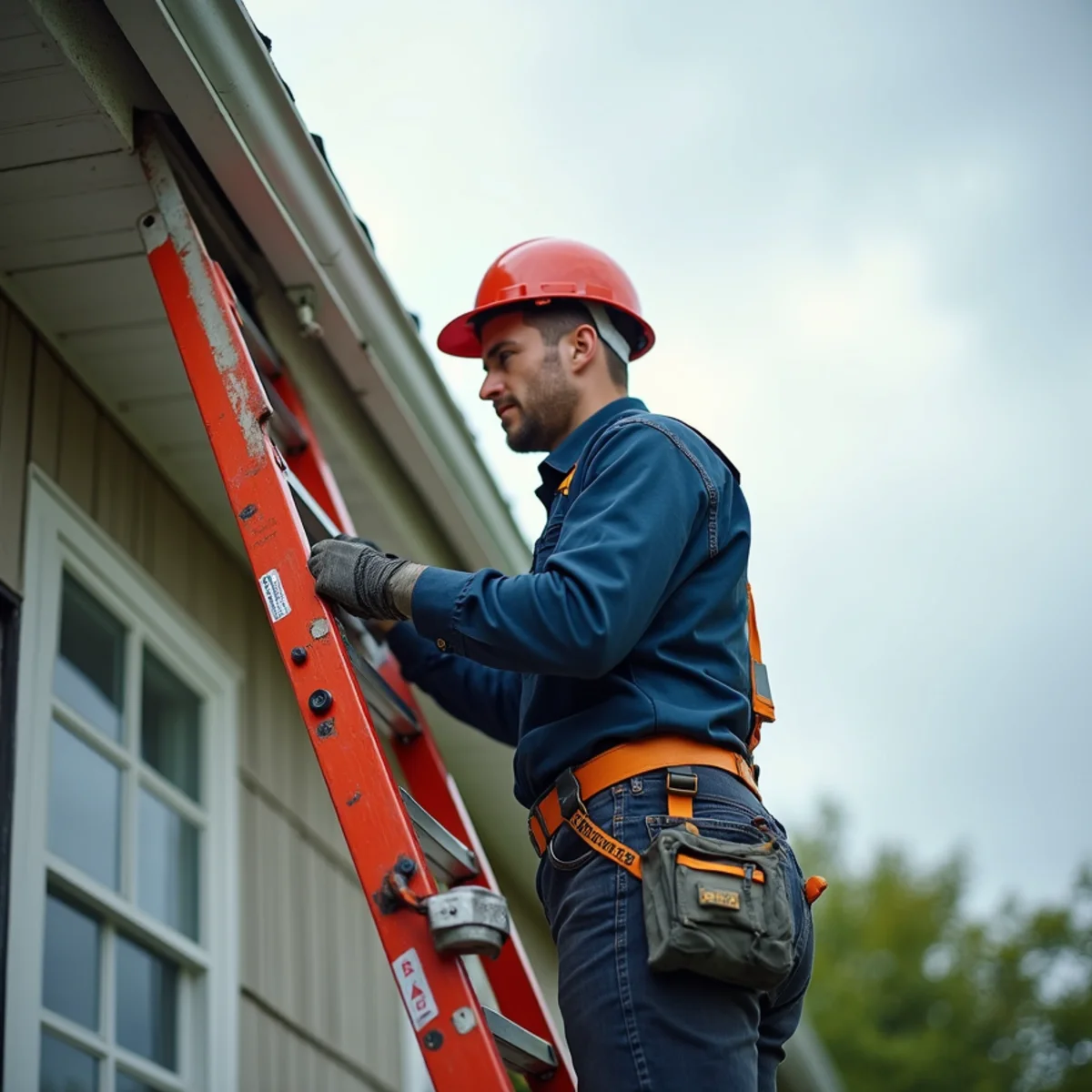
2. Obtain a Pre-Claim Roof Assessment from a Local Contractor
Before placing a call to your insurance claims department, contact an experienced, reputable local roofing contractor to perform a complimentary forensic storm inspection.

Filing a claim that gets closed without payment (because damage is below your deductible or classified as normal wear-and-tear) remains on your Comprehensive Loss Underwriting Exchange (C.L.U.E.) report, which can increase your future premium rates. A professional contractor climbs the roof, inspects all directional slopes, checks soft metals (gutters, box vents, chimney flashing), and performs an honest assessment. If the damage is superficial or under your deductible, we recommend paying for a minor repair out-of-pocket rather than filing an unnecessary claim.
3. Filing the First Notice of Loss (FNOL)
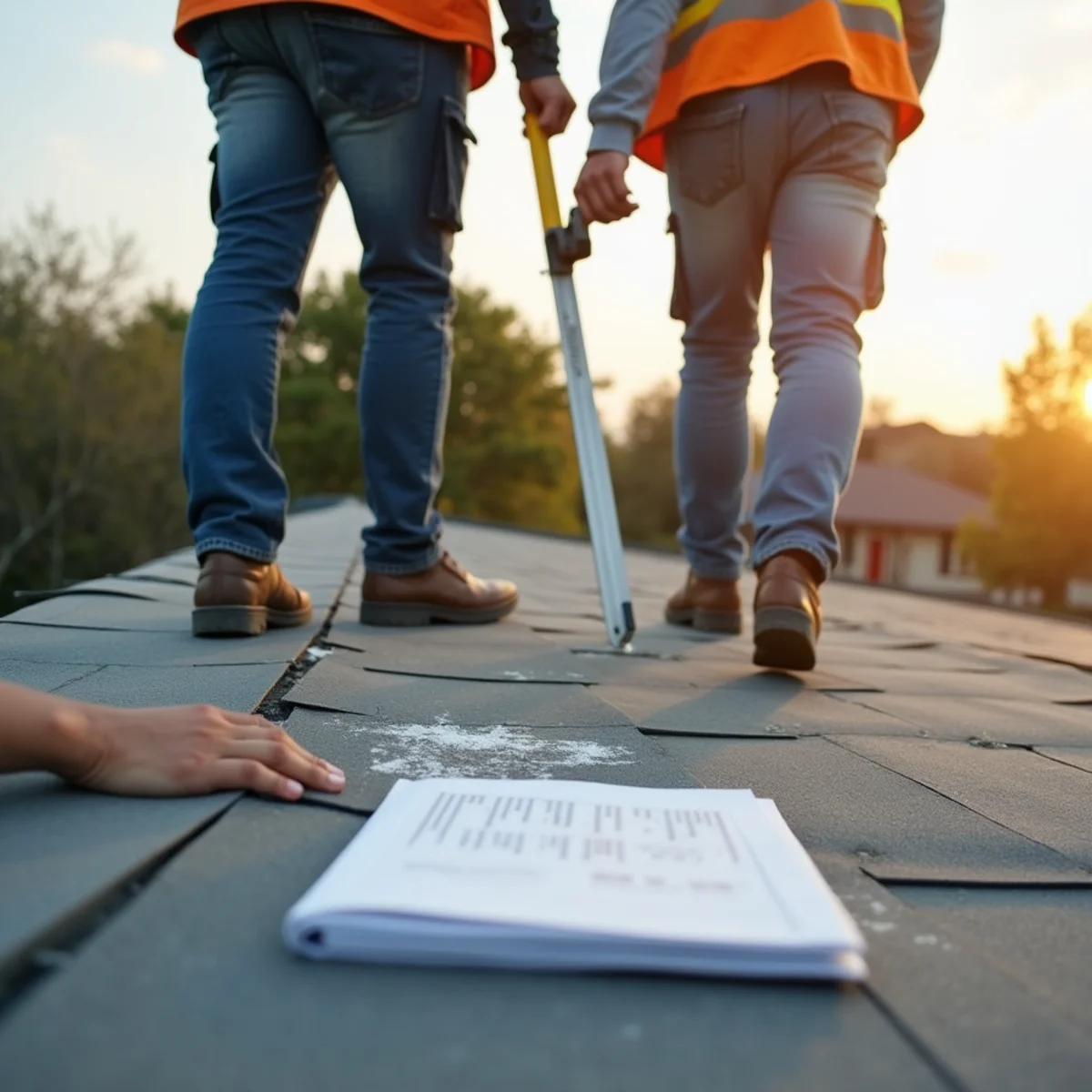
If your contractor confirms qualifying functional storm damage exceeding your deductible, contact your insurance company's claims hotline or submit an online claim through your policy portal. When filing:
Provide the confirmed date and time of the storm event.
Describe the loss accurately: 'Wind damage causing creased/missing shingles' or 'Hail impact damage to roofing shingles, vents, and gutters.'
Inform the representative that a licensed local roofing contractor has inspected the home and completed temporary emergency tarping if active leaks were present.
Obtain your claim number, the name and direct phone number of the assigned desk adjuster, and the name of the third-party field inspection company.
4. The Critical On-Site Adjuster Meeting
Within 7 to 14 days of filing, your insurer will dispatch an independent field adjuster to physically inspect your roof. It is absolutely vital that your roofing contractor is present on the roof alongside the adjuster.
Adjusters often inspect four to six properties a day and can easily overlook subtle hail bruises or wind-fractured fiberglass tabs. When our senior project manager attends the meeting:
We walk each roof plane together, pointing out circular hail impact craters where protective mineral granules have dislodged and exposed underlying black asphalt.
We examine soft aluminum gutters, downspout elbow joints, and air conditioning condenser fins to establish matching collateral impact evidence.
We present high-resolution date-stamped digital photo files and local wind-speed documentation.
We ensure the adjuster notes mandatory building code requirements under the 2024 Residential Code of Ohio, including drip edge installation, ice and water shield requirements, and attic ventilation balancing.
5. Decoding Your Insurance Claim Paperwork: ACV vs. RCV
When your claim is approved, your carrier issues an itemized Xactimate loss estimate and an initial payment check. Understanding the terminology prevents panic:
Replacement Cost Value (RCV): The total estimated dollar amount required to completely tear off and replace your storm-damaged roof with brand-new materials at today's market labor and supply prices.
Actual Cash Value (ACV): The depreciated value of your existing roof at the moment before the storm occurred. Depreciation is calculated based on the roof's age and condition.
Your Deductible: Your out-of-pocket financial responsibility under your policy agreement (typically $1,000, $1,500, or 1% of your home's insured dwelling value).
The First Check: Your insurance carrier issues an initial check representing the ACV amount minus your deductible. This funds the contractor's initial deposit and material orders.
Recoverable Depreciation: In standard replacement-cost policies, the withheld depreciation is released in a second check once the roofing contractor submits a final completion certificate and invoice proving the roof was replaced.
6. Beware of Out-of-State Storm Chasers and Deductible Scams
Following major hail or wind events in Mahoning County, out-of-state contractors ('storm chasers') flood local neighborhoods, going door-to-door offering 'free roofs' and promising to 'waive your insurance deductible.'
Under Ohio Revised Code Section 3904.16, it is illegal for a contractor to pay, rebate, waive, or absorb a homeowner's insurance deductible. Any contractor offering to falsify invoices to hide your deductible is committing felony insurance fraud that can result in policy cancellation, denied claim checks, and legal prosecution. Furthermore, transient storm chasers frequently use sub-par crews, install inferior shingles, and disappear before winter arrives, leaving you with no workmanship warranty when leaks emerge.
| Step | Action Item | Responsible Party | Target Timeline | Key Outcome |
|---|---|---|---|---|
| 1. Event Verification | Log date, time, wind speeds, and radar hail reports | Homeowner & Contractor | Within 24–48 hours | Establishes documented storm date for carrier notice |
| 2. Forensic Inspection | Mark 10x10 test squares; photograph spatter and creases | Licensed Local Roofer | Within 3–5 days | Confirms repair scope exceeds deductible before filing |
| 3. First Notice of Loss | Submit claim via carrier portal or agent with loss date | Homeowner | Within 7–14 days | Assigns claim number and independent adjuster |
| 4. Adjuster Meeting | Walk roof together; review decking, flashings, code items | Adjuster & Roofer | Days 14–28 | Generates comprehensive itemized insurance scope |
| 5. ACV Check & Build | Deposit first check; schedule roof replacement tear-off | Homeowner & Contractor | Days 30–45 | Materials delivered and new roof installed to code |
| 6. Depreciation Release | Submit certificate of completion & final invoice | Contractor & Adjuster | Days 45–60 | Carrier releases remaining recoverable depreciation |
When insurance adjusters climb onto a storm-damaged roof in Mahoning County, they are trained to follow strict Haag Certified inspection guidelines. They outline a 10-foot by 10-foot 'test square' (100 square feet) in chalk on each directional roof slope (North, South, East, West). In standard carrier guidelines, if an adjuster identifies 8 to 10 or more qualifying hail impact bruises or creased shingle tabs within that 100-square-foot square, that entire roof slope is officially deemed a total loss. Having your local roofing contractor on the roof during this inspection is critical—we ensure the adjuster marks soft hail bruises where internal fiberglass mats are ruptured, inspects soft metal furnace caps and gutter downspouts for collateral impact spatter, and includes mandatory drip edge and ice-barrier code upgrades in their initial estimate.
Related Local Roofing Services & Coverage
Experiencing issues highlighted in this guide? Our certified roofing crews provide expert comprehensive storm damage insurance claim assistance with rapid response times across Mahoning County and Boardman and Youngstown.
Get high-resolution photo documentation and hail test-square mapping before calling your carrier.
Targeted replacement of creased or torn shingle courses meeting Ohio code matching rules.
Full architectural tear-off and installation funded by your insurance claim settlement.
Frequently Asked Questions
Zana Roofing & Construction
Family-owned roofing contractor proudly serving Youngstown and the Mahoning Valley since 2020. Specializing in residential and commercial roof replacement, storm restoration, and 24/7 emergency leak mitigation.